AI Brand Analysis
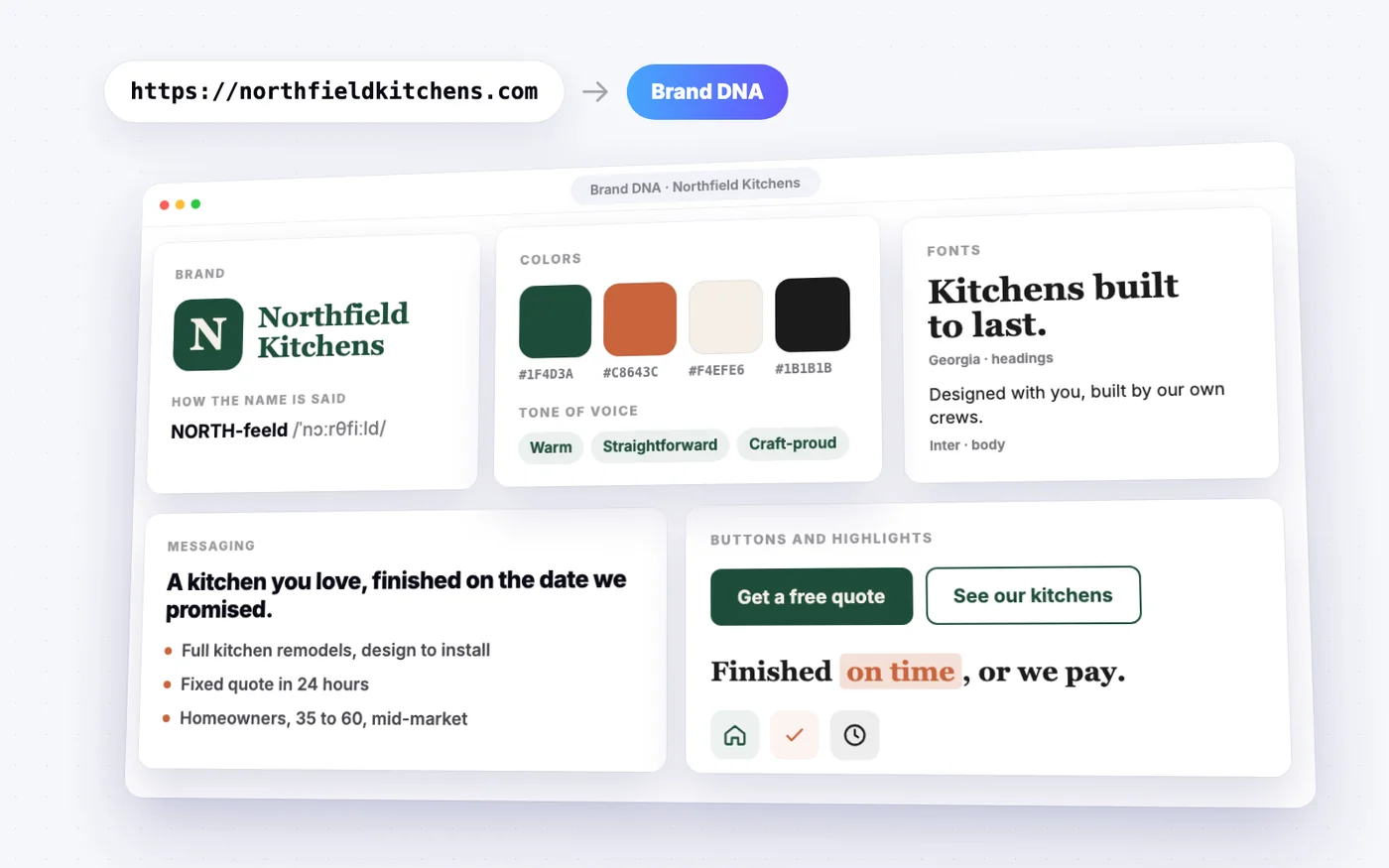
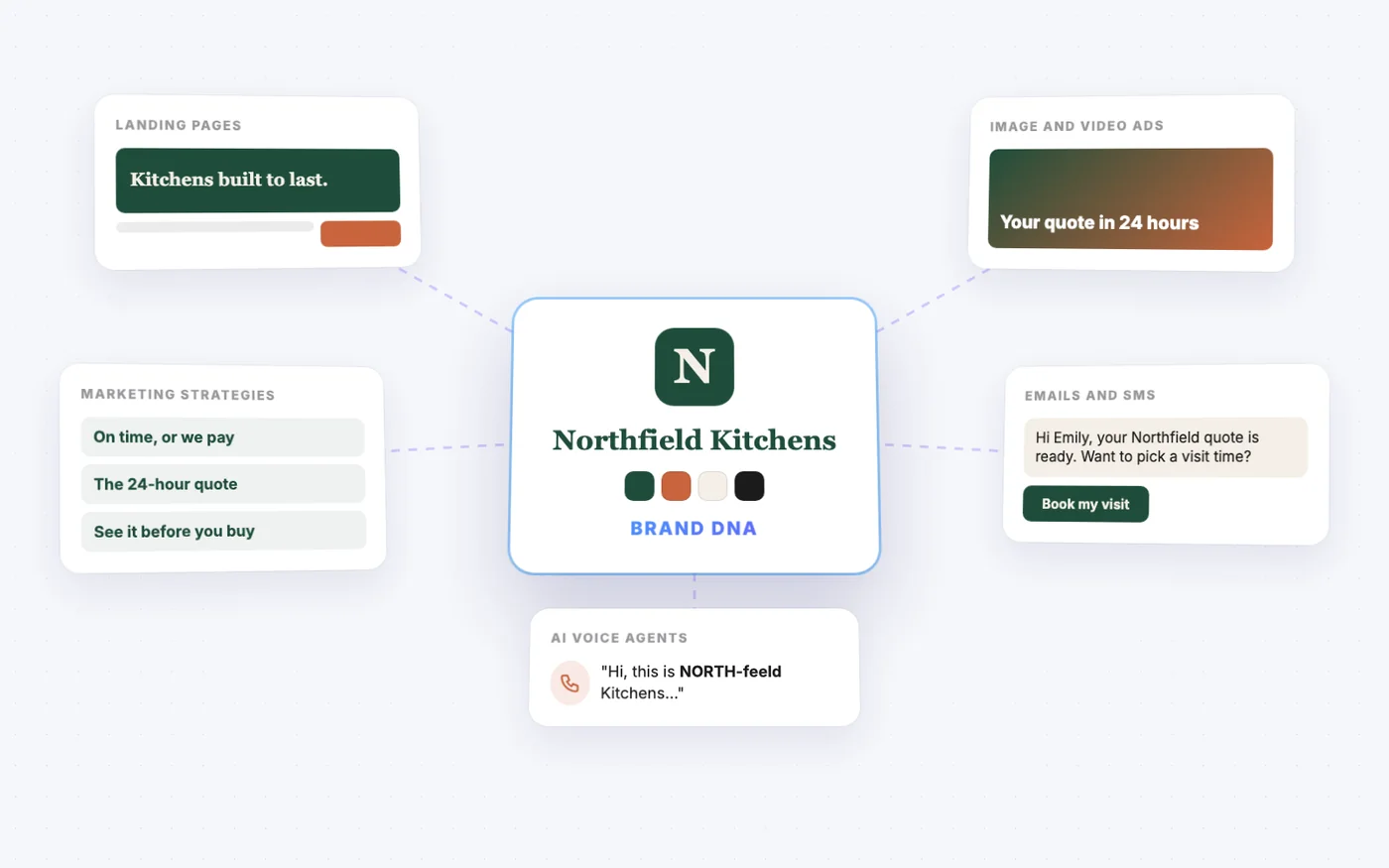
Every campaign in ActualSales.AI starts with brand analysis. You enter a website URL, and the AI extracts the brand's visual identity, messaging, and market positioning in seconds. This extracted "brand DNA" then powers everything the platform generates -- landing pages, video ads, image banners, email templates, SMS copy, and voice agent scripts. Without accurate brand analysis, none of the downstream outputs would look or sound like they belong to the brand.
This page explains what the analysis extracts, how to refine it, and why it matters for campaign quality.
What the AI Extracts
When you provide a URL, the AI visits the website and performs a comprehensive analysis. The extraction covers:
- Brand colors. Primary, secondary, and accent colors identified from the site's CSS, images, and design elements. These are captured as exact hex values and used throughout all generated assets.
- Logos. The brand's logo files are extracted from the page -- typically from the header, footer, or meta tags. Multiple logo variants (light background, dark background, icon-only) are captured when available.
- Fonts. The typefaces used on the site are identified, including font families, weights, and hierarchy (headings vs. body text). Generated landing pages and ads use these fonts or close equivalents.
- Messaging. Taglines, value propositions, product descriptions, and key selling points are extracted from the page content. The AI identifies the core message the brand communicates to its audience.
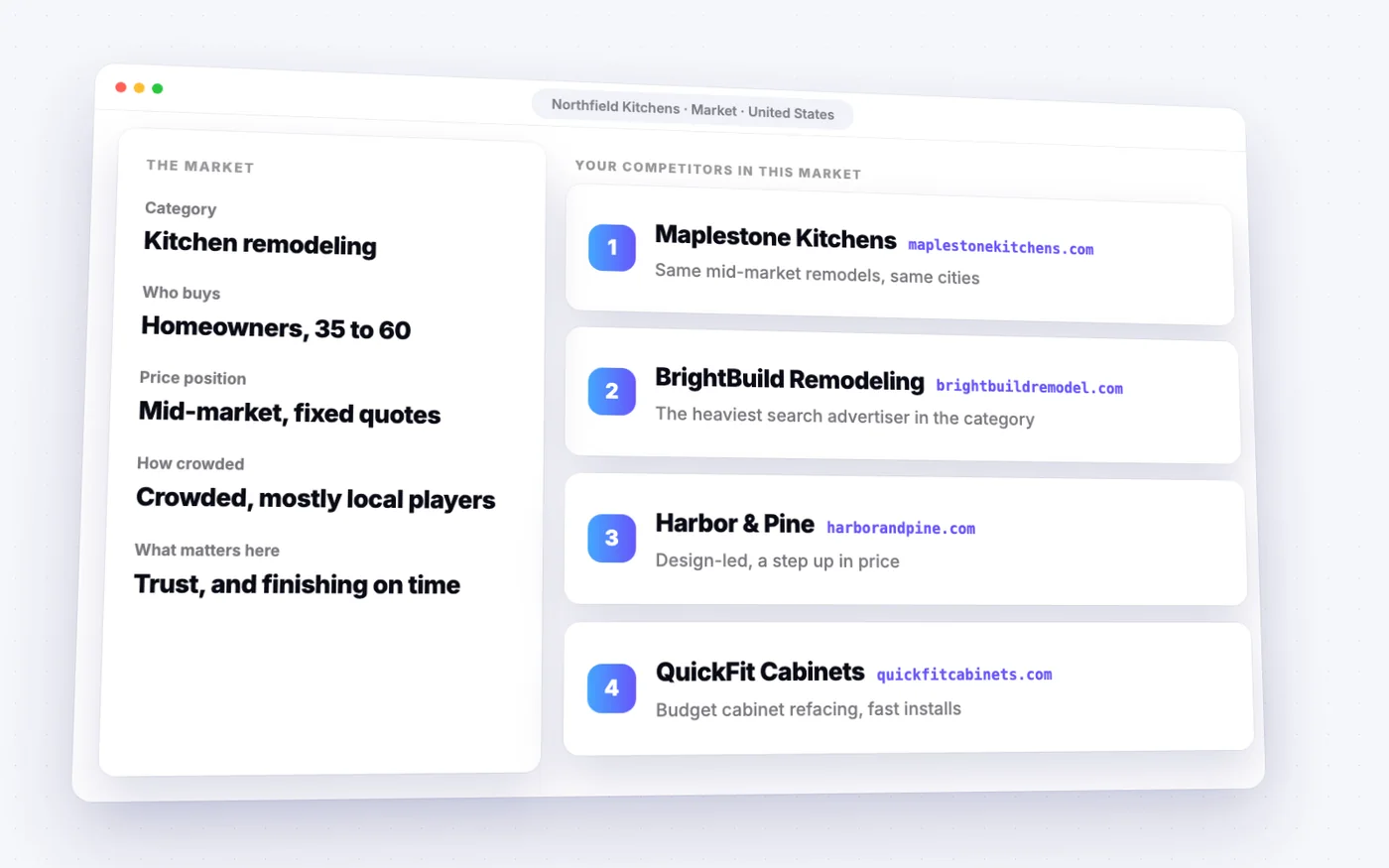
- Market positioning. The AI determines the brand's market segment, target audience, competitive positioning, and tone of voice. This informs strategy generation -- a luxury brand gets different strategies than a budget provider.
- Products and services. Specific offerings listed on the site are cataloged, including pricing if visible, feature lists, and product categories.
The analysis typically completes in under 30 seconds. The result is a structured brand profile that the platform references throughout campaign generation.
Brand Book PDF Upload
For brands with established style guides, the platform supports uploading a brand book PDF. This is optional but significantly improves conformance for organizations that have strict brand guidelines.
When a brand book is uploaded, the AI processes it alongside the URL analysis. The PDF takes precedence where conflicts exist -- if the website uses slightly off-brand colors (common on older pages), the brand book's official hex codes are used instead. The PDF also provides information that may not be visible on the website:
- Official color palettes with specific use cases (primary, secondary, prohibited combinations)
- Logo usage rules (minimum size, clear space, approved backgrounds)
- Typography specifications (approved fonts, fallbacks, size hierarchies)
- Tone of voice guidelines (formal vs. casual, approved terminology, restricted language)
- Photography and imagery style guidelines
The brand book upload is particularly valuable for agencies managing campaigns for client brands. It ensures the generated output meets the client's brand standards without manual adjustment.
Editing and Overriding Extracted Values
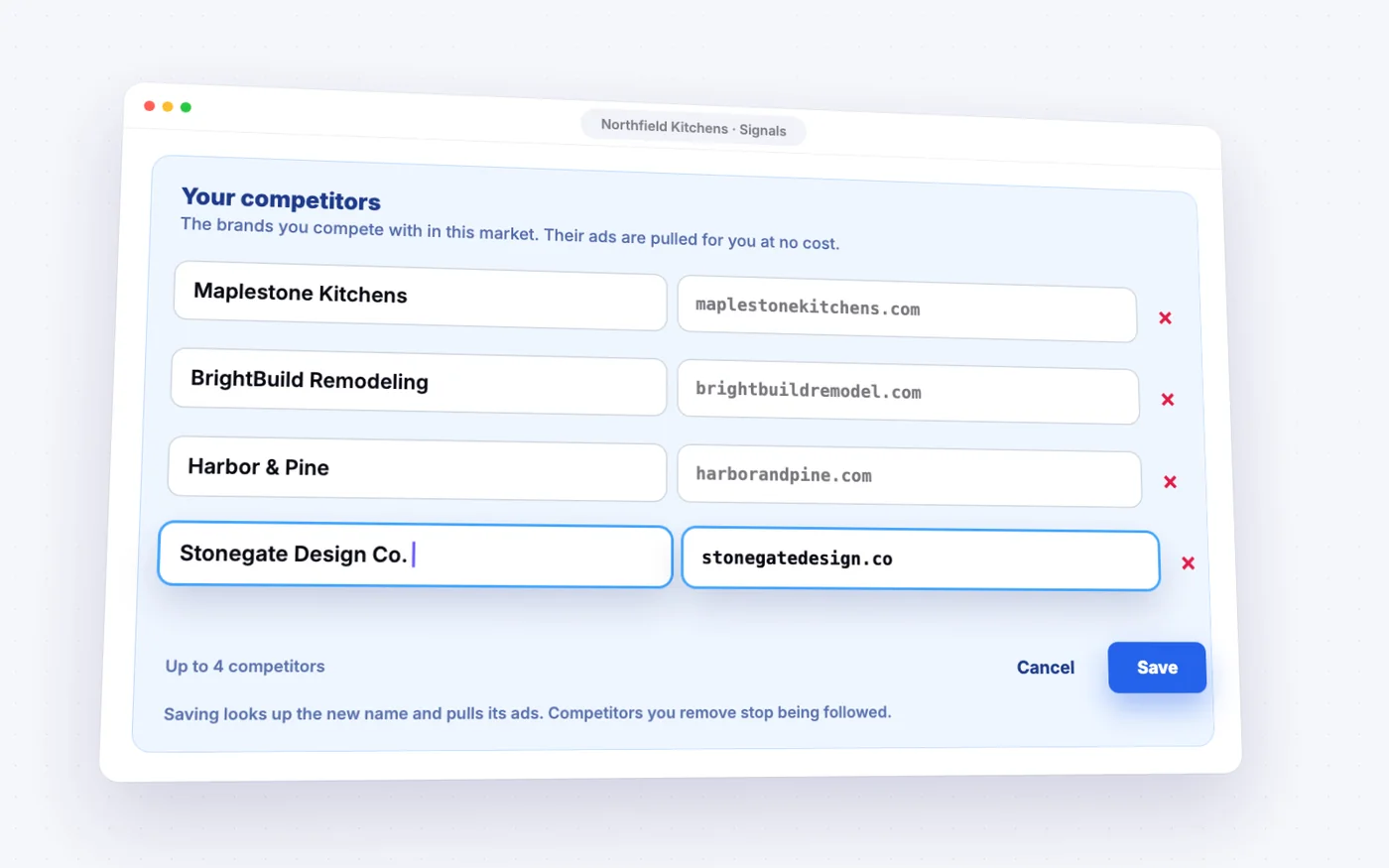
Brand analysis is not a black box. After extraction, the entire brand profile is presented in an editable interface. You can:
- Override colors. Change any extracted color to a specific hex value. Useful when the website does not reflect the latest brand refresh.
- Replace logos. Upload different logo files if the extracted versions are not the preferred ones.
- Edit messaging. Modify the extracted taglines, value propositions, or product descriptions to better reflect the brand's current positioning.
- Adjust positioning. Change the market segment, target audience, or competitive framing if the AI's interpretation does not match reality.
- Update fonts. Specify exact font families if the extraction missed a custom or proprietary typeface.
Any changes you make are saved to the brand profile and immediately reflected in all subsequently generated assets. You can also re-run the analysis at any time if the source website has been updated.
How Brand Analysis Powers Other Features
The brand profile is the foundation for every other feature in the platform. Here is how it connects:
- Marketing strategies. The 5 generated strategies are informed by the brand's positioning, target audience, and messaging. A B2B software company gets different strategy angles than a consumer retail brand.
- Landing pages. All 20 landing pages (4 layouts x 5 strategies) use the extracted colors, logos, fonts, and messaging. They look like the brand's own pages.
- Video and image ads. Creatives are rendered in brand colors with logo overlays and strategy-aligned copy.
- Email and SMS templates. Copy matches the brand's tone of voice. Email designs use brand colors and logos.
- AI voice agents. Agent scripts reference the brand name, products, and key messaging extracted during analysis.
- Google Ads copy. Headlines and descriptions use the brand's terminology and value propositions.
This is why the analysis step matters so much. A thorough, accurate brand profile means every generated asset is on-brand without manual correction. A rushed or inaccurate profile means time spent fixing outputs.
Multi-Brand Support
The platform supports multiple brands per account. Each brand has its own analysis, profile, strategies, and generated assets. This is particularly relevant for:
- Agencies managing campaigns across a portfolio of client brands
- Enterprise teams with sub-brands or product lines that each need distinct campaigns
- Multi-market operations where the same brand may have different positioning by country
Brand profiles are independent. Analyzing one brand does not affect another. Each brand's generated assets reference only that brand's profile.
Analysis Accuracy
The AI analysis is generally accurate for well-structured websites with clear branding. Sites with consistent CSS, proper meta tags, and standard HTML layouts yield the best results. Factors that can reduce accuracy include:
- Single-page applications where content is loaded dynamically via JavaScript
- Websites with minimal branding or generic templates
- Sites behind login walls or geographic restrictions
In these cases, the brand book PDF upload and manual editing options become especially valuable. You can supplement what the AI could not extract automatically.
Frequently Asked Questions
What does the AI extract from a URL?
Brand colors (hex values), logos, fonts, taglines, value propositions, product information, market positioning, target audience, and tone of voice. The extraction typically completes in under 30 seconds.
Can I upload a brand book PDF?
Yes. Uploading a brand book PDF is optional but recommended for brands with strict guidelines. The PDF's specifications take precedence over URL extraction where conflicts exist, ensuring precise brand conformance.
Can I override the extracted values?
Yes. The entire brand profile is editable after extraction. You can change colors, replace logos, modify messaging, adjust positioning, and update fonts. Changes are saved and reflected in all subsequently generated assets.
How long does brand analysis take?
The URL analysis typically completes in under 30 seconds. If a brand book PDF is uploaded, processing may take slightly longer depending on the document's size.
Does brand analysis work for any website?
It works best on well-structured websites with clear branding and standard HTML. Sites behind login walls, heavy JavaScript-only rendering, or minimal branding may yield less complete results, which can be supplemented with manual editing or a brand book PDF upload.